
TL;DR: Digital marketing for business means using online channels, your website, SEO, social media, email, and paid ads, to attract and convert customers. It works 24/7, costs far less than traditional advertising, and gives you measurable results. This guide walks you through exactly how to start, what to prioritize, and how to build a 3-month action plan that fits a small business budget.
My mother runs a tailoring education business in India. No formal marketing budget. No agency. No technical background. I taught her everything I know about digital marketing, and today her YouTube channel has 5,000+ subscribers, her Facebook group has 20,000+ members, and her website brings in around 5,000 visitors a day.
If she can do it, you can too.
I have been doing SEO and digital marketing for 15+ years. I have built 100+ websites, run two digital marketing agencies, and taught 30,000+ students worldwide. In this guide, I am not going to give you vague theory. I am going to show you exactly how digital marketing for business works, what types exist, why it matters, and most importantly how to start without burning through your budget.
By the end of this article, you will know:
- What digital marketing for business actually means
- The four biggest benefits that apply directly to small businesses
- Every major type of digital marketing with honest assessments
- How to build a digital foundation before spending a single dollar on ads
- A 3-month action plan you can start this week
Let’s get into it.
What Is Digital Marketing for Business?
Digital marketing for business is the use of internet-based channels and tools to promote your products or services, attract customers, and grow revenue.
Unlike traditional marketing (billboards, newspaper ads, TV spots), digital marketing lets you reach specific people, track every click and purchase, and adjust your spending in real time. You do not need a massive budget. You need the right strategy.
The core idea is simple: your customers are online. They search Google before buying. They scroll Instagram during their lunch break. They watch YouTube videos to learn about products. Digital marketing puts your business in front of them at those exact moments.
Whether you run a local bakery, a B2B services firm, a retail shop, or a consulting practice, the fundamentals of digital marketing for business development work the same way. The channels and tactics will differ based on your audience, but the underlying logic does not change.
Why Digital Marketing Matters for Business: 4 Real Benefits
Before I walk you through the types, I want to make sure you understand the actual value here. Not vague benefits like “increased brand awareness.” Concrete, practical reasons why digital marketing for business growth outperforms traditional marketing.
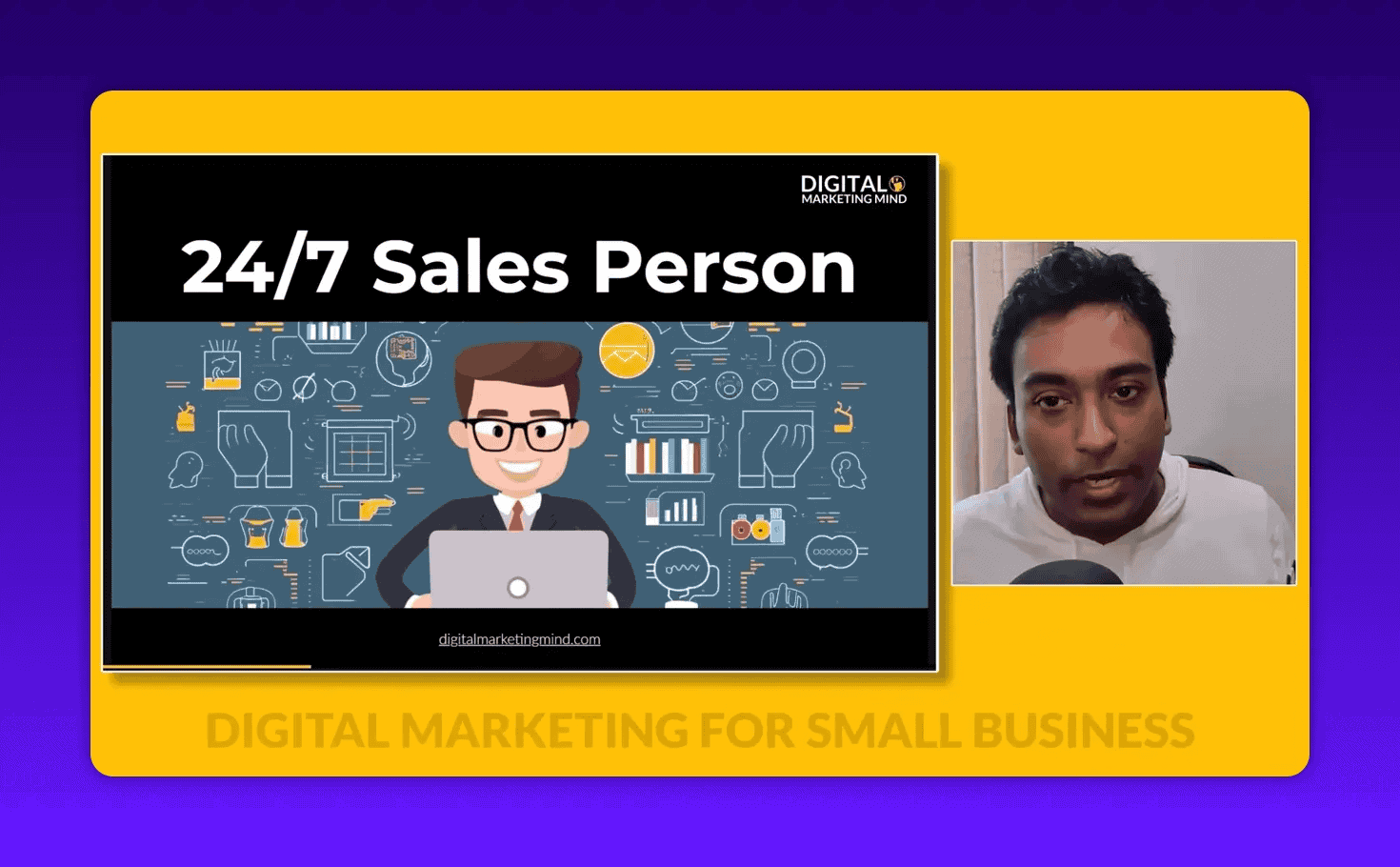
1. It Is a 24/7 Salesperson That Never Sleeps
A physical shop closes. An employee goes home. But a well-built website with solid SEO is working for your business every single hour of every single day.
Think about that. When a potential customer in a different time zone searches for what you sell at 2 a.m., your website is there. They can learn about your products, read reviews, make a purchase, or fill in a contact form without you needing to be awake.
That is not possible with traditional advertising. Digital marketing essentially gives you a salesperson that works 24 hours, costs a fraction of a human hire, and never takes a sick day.
2. It Is Cost Effective at Any Budget Level
Traditional advertising is all-or-nothing. A TV ad costs tens of thousands. A full-page newspaper ad runs hundreds to thousands. You spend big, hope for results, and cannot easily adjust mid-campaign.
Digital marketing for business is completely different. You can start with $5 or $5,000. You can run a Facebook ad campaign for $10 a day, test what works, then scale what converts. You can do SEO entirely for free with time invested instead of money.
The result and effort vary depending on investment, but the entry point is accessible to any small business. This is why digital marketing levels the playing field between a one-person operation and a Fortune 500 company.
3. Every Result Is Measurable
This is one of the most important advantages of digital marketing for business and one that most business owners underappreciate until they experience it.
With a newspaper ad, you have no idea how many people saw it, how many were interested, or how many walked into your shop because of it. You guess.
With digital marketing, you know exactly:
- How many people visited your website
- Where they came from (Google, Facebook, email)
- What pages they viewed
- How long they stayed
- Whether they bought something or submitted a contact form
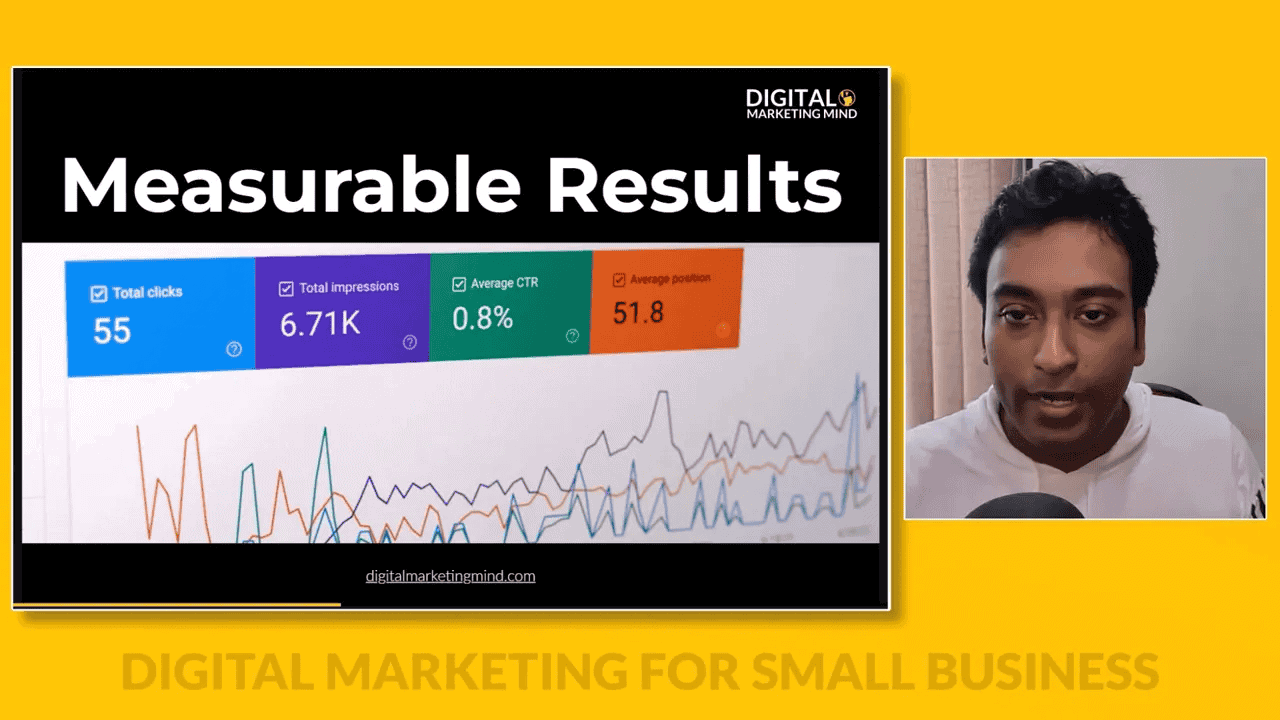
Tools like Google Analytics and Google Search Console (both free) give you this data in real time. You stop guessing and start making decisions based on actual numbers.
4. It Levels the Playing Field
In the offline world, bigger businesses win simply because they have more money to advertise. They buy the best billboard spots, the prime-time TV slots, the full-page ads.
Online, a small business that understands digital marketing can outcompete a large corporation. A well-optimized local SEO strategy can put your bakery above a national chain in Google Maps results. A genuinely helpful blog post can outrank a major brand’s generic landing page.
Knowledge and consistency beat budget in digital marketing. That is not theory. I have seen it repeatedly across 100+ websites I have built and managed.
6 Types of Digital Marketing for Business (And What Each One Does)
There is no single type of digital marketing that works for every business. The goal is to understand each one, figure out where your customers are, and choose the channels that match both your audience and your resources.
Here are the main types of digital marketing for business with honest assessments of each.
1. Website (Your Digital Storefront)
Your website is not a digital marketing channel. It is your home base. Everything else in digital marketing sends people back to your website.
Think of your website as your 24/7 shop on the internet. It puts all your information in one place: products, services, pricing, contact details, testimonials, about page. A potential customer who finds you on Google, sees your Facebook ad, or gets your email newsletter will eventually land here.
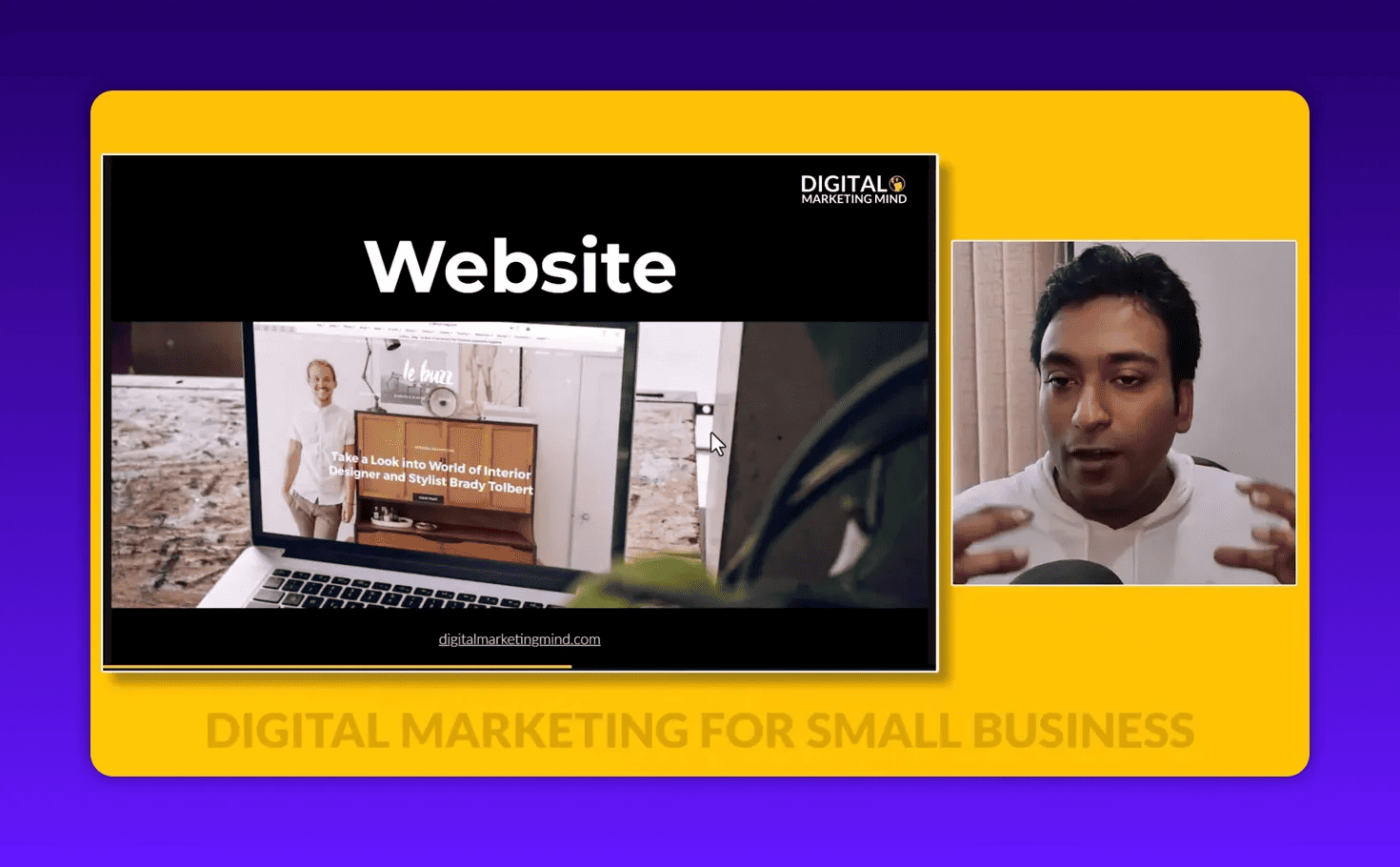
Without a website, the rest of your digital marketing is operating without a destination. Before you invest in ads, SEO, or social media, you need a functional website that clearly explains what you do and makes it easy for a visitor to take action.
Best for: Every business, no exceptions.
Cost: Free to low-cost platforms like WordPress exist, but a professional site typically costs $500 to $3,000 to set up properly.
Time to results: Immediate once live. SEO benefits compound over months.
2. SEO: Search Engine Optimization
SEO is what gets your website ranked on Google, Bing, and other search engines when someone searches for what you sell.
When a customer types “digital marketing agency in Coimbatore” into Google, SEO is what determines whether your business appears in the results. Done properly, SEO brings you free, consistent, targeted traffic month after month without paying per click.
SEO has two main components:
Local SEO: Gets your business ranked in Google Maps and local search results. Critical for businesses that serve a specific geographic area. This includes setting up your Google Business Profile, building local citations, and optimizing your website for location-based keywords.
Organic SEO: Gets your website pages ranked for search queries related to your business. This involves keyword research, creating content that answers what your customers are searching for, and building backlinks from other sites.
I personally favor SEO above all other digital marketing channels. The traffic is free, it compounds over time, and intent is high. Someone who searches “buy leather handbags in Chennai” is far more likely to buy than someone who randomly sees a Facebook ad.
SEO takes time. Expect 3 to 6 months before you see meaningful results. But once you rank, the traffic keeps coming without ongoing ad spend.
Best for: Businesses in it for the long term. Excellent ROI over 6 to 12 months.
Cost: Free if you do it yourself. Tools like Semrush start at $139/month. Budget alternatives with lifetime deals exist; check the active SEO lifetime deals list for options.
Time to results: 3 to 6 months for meaningful traffic.
3. Content Marketing
Content marketing is creating useful, relevant content (blog posts, videos, infographics, guides) that attracts your target audience.
This overlaps heavily with SEO but the goal extends beyond just ranking. Content marketing builds trust and authority over time. When someone reads 10 helpful articles from your business before they ever contact you, they already feel like they know and trust you.
Content that works is not promotional. It solves real problems. A local accounting firm publishing “How to File GST Returns for Small Businesses in India” is doing content marketing that directly addresses what its target customers are searching for and struggling with.
Best for: Businesses with the time or resources to create consistent, high-quality content.
Cost: Low if you write it yourself. Higher if you hire writers.
Time to results: 3 to 9 months depending on competition and publishing frequency.
4. Social Media Marketing
Social media platforms, Facebook, Instagram, LinkedIn, TikTok, YouTube, are where your customers spend time outside of work and shopping.
Social media marketing is about showing up in those spaces with content that builds relationships, educates, entertains, or solves problems. Done right, it builds a loyal audience that eventually converts into customers and referrers.
The key mistake small business owners make with social media is trying to be on every platform. Pick one or two where your specific audience actually spends time, and do those well instead of spreading yourself thin across six platforms with mediocre content.
A local restaurant should focus on Instagram and Facebook. A B2B consulting firm should prioritize LinkedIn. A business targeting young consumers may find TikTok worth exploring.
Best for: Businesses with visual products or services and audiences that use social media actively.
Cost: Organic (free) posting costs nothing but time. Paid ads can start at $5 to $10 a day.
Time to results: 1 to 3 months for organic growth. Paid ads deliver results immediately.
5. Email Marketing
Email marketing is often overlooked by small businesses, yet it consistently delivers the highest return on investment of any digital marketing channel.
The reason is simple. People who give you their email address are already interested. They opted in. When you send them useful content and relevant offers, they are far more likely to buy than a cold visitor who stumbled on your website.
Email marketing for business works by collecting email addresses through your website (using a lead magnet, newsletter signup, or checkout process), then sending regular emails that provide value. Not every email should pitch something. Most should educate, entertain, or help your subscriber. The pitch emails convert far better when they are surrounded by genuinely useful content.
Best for: Businesses with an existing customer base or a way to collect emails (online bookings, e-commerce, lead magnets).
Cost: Free tools like Mailchimp exist up to 500 subscribers. Paid tools run $10 to $30/month for most small business volumes.
Time to results: Can be immediate if you already have a list. Building a list from scratch takes months.
6. Paid Advertising (PPC)
Pay-per-click (PPC) advertising means you pay each time someone clicks your ad. This includes Google Ads, Facebook Ads, Instagram Ads, and LinkedIn Ads.
PPC gives you immediate visibility and traffic. You do not have to wait months for SEO to kick in. You set a budget, target specific audiences or keywords, and your ads appear in front of them right now.
The catch is that PPC requires knowledge to run profitably. Going in without understanding targeting, bidding strategies, or conversion optimization means burning through budget with little to show for it. The business owner in my earlier example spent the equivalent of $3,000 on Facebook ads with no website, no targeting strategy, and no conversion tracking. The results were poor because the foundation was not in place.
Use PPC to amplify what is already working, not as your first move.
Best for: Businesses with a working website, clear value proposition, and some budget to test.
Cost: You set your own budget. Google Ads minimum is around $1/day. Facebook/Instagram Ads start at $1/day but $10 to $20/day is more realistic for testing.
Time to results: Immediate clicks and data. Profitable campaigns typically take 2 to 4 weeks of testing to optimize.
How to Start Digital Marketing for Business: Build Your Foundation First
Here is where most small business owners get it wrong. They see a Facebook ad for an ads course, spend $1,000 learning to run Facebook ads, and burn through another $2,000 trying to run them without a working website, a clear offer, or any understanding of their target audience.
Before you spend a single dollar on ads or even create your first social media post, you need a digital foundation. I learned this lesson from a client, a local mattress shop, who spent the equivalent of $3,000 on Facebook ads without a website, without tracking, and without a plan. Results were mediocre at best.
The digital foundation has three parts:
Part 1: Know your business online presence. Does your website clearly communicate what you do, who you serve, and what to do next? Is your Google Business Profile claimed and filled out? Are your business details consistent everywhere online?
Part 2: Know your target audience. Who specifically is your ideal customer? What are their problems? Where do they look for solutions? This is where a buyer persona comes in.
Part 3: Know your goals. What does success look like? How do you measure it? Without specific goals, you have no idea whether your digital marketing is working.
Let me walk you through Parts 2 and 3 in detail because they are what most guides skip.
How to Create a Buyer Persona for Your Business
A buyer persona is a fictional but detailed profile of your ideal customer. The idea comes from a simple truth: if you try to market to everyone, you end up selling to no one.
Digital marketing works when it speaks directly to a specific person’s specific problem. The more clearly you define who that person is, the better your website copy, your SEO content, your social media posts, and your ads will perform.
Here is what a buyer persona for a small digital marketing agency targeting local businesses might look like:
Demographics
- Age: 35 to 55
- Gender: Any (business owners)
- Location: Coimbatore, Tamil Nadu
Problems they are facing
- Struggling to attract customers through the internet
- Want to build an online presence but lack technical knowledge
- Have had bad experiences with agencies that did not deliver results
Goals they are trying to achieve
- Increase sales and revenue through digital channels
- Establish a trusted brand presence in their local market
- Learn enough to evaluate agencies and not get ripped off again
Where they search for solutions
- Google (search for “digital marketing agency near me”)
- YouTube (look for tutorials and comparisons)
- Social media (Facebook groups, LinkedIn)
- Local networking events
What influences their purchase decision
- Recommendations from other business owners they trust
- Affordable, flexible pricing (not locked into long contracts)
- Proof that the agency understands their local market
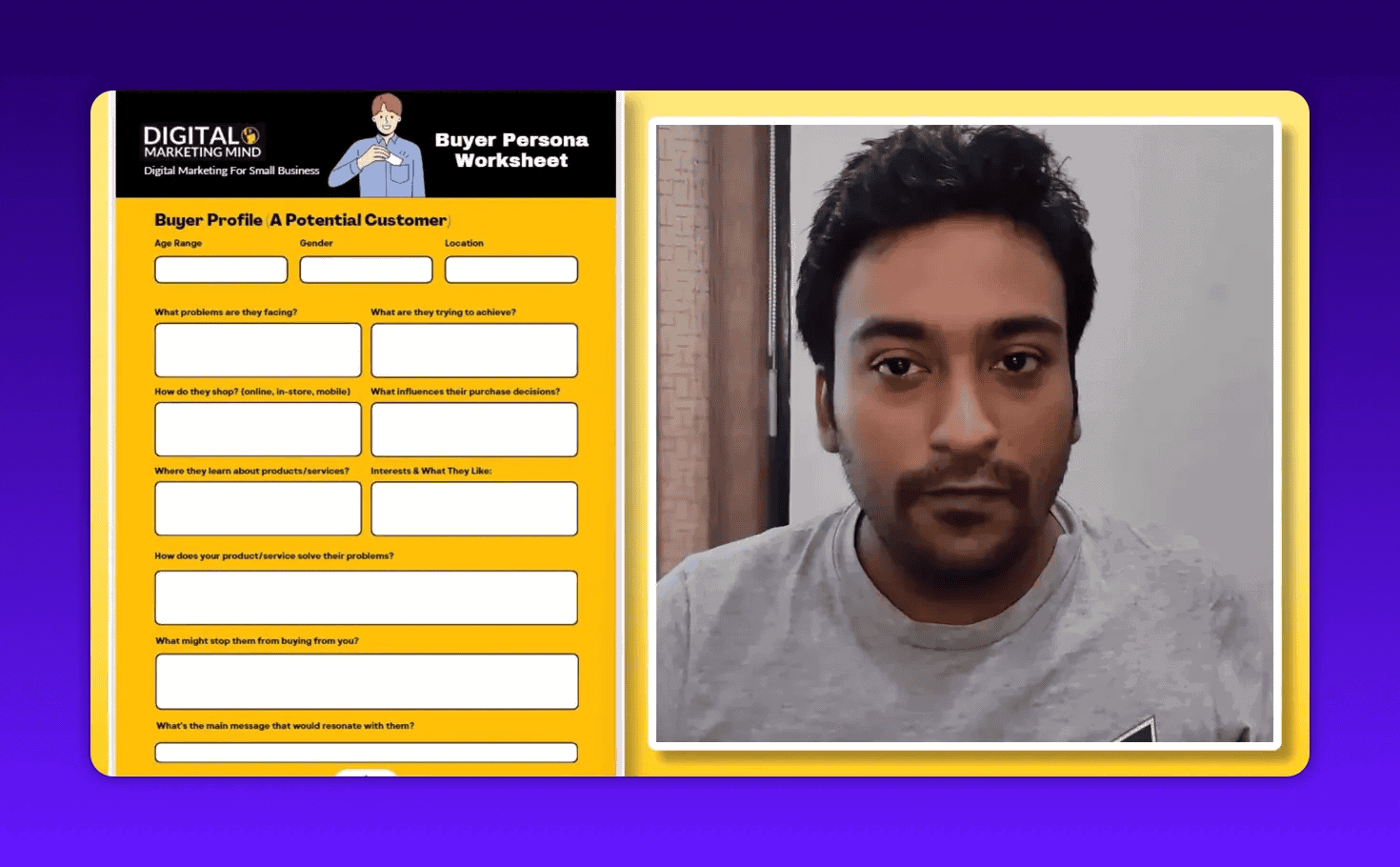
You can use a free worksheet to map this out for your own business. Download the free buyer persona worksheet and fill in the fields based on your real customer conversations, not assumptions.
One more thing: this document is not set-in-stone the moment you create it. Update it as you learn more. Talk to your actual customers. What problems brought them to you? How did they find you? What almost stopped them from buying? Their answers will refine your persona and make your marketing sharper.
How to Set SMART Goals for Digital Marketing
Vague goals produce vague results. “I want more website traffic” is not a goal. It is a wish.
SMART goals are the framework I use for every digital marketing campaign, and I teach them to every business owner I work with. SMART stands for:
Specific: The goal must be precise. Not “increase traffic” but “increase organic search traffic from Google by 20% in 3 months.”
Measurable: You need a number to track. Website sessions, email subscribers, conversion rate, number of enquiries; pick a metric you can actually measure. Use Google Analytics for website traffic, native analytics for social media.
Achievable: Your goal should stretch you without being impossible. “Get 1 million Facebook followers in a month” is not achievable for a local business. “Grow my Facebook page from 200 to 500 followers in 3 months” is achievable if you post consistently and run a small ad.
Relevant: The goal should connect to actual business outcomes. Website traffic for its own sake does not pay bills. Traffic that converts into enquiries, store visits, or purchases does.
Time-bound: Set a deadline. Without one, there is no urgency and no way to evaluate whether you are on track.

Here are examples of SMART goals for different business types:
- Local cafe: “Increase Google Maps enquiries (calls and directions clicks) by 30% in 90 days by optimizing Google Business Profile and getting 20 new reviews.”
- E-commerce store: “Increase organic search traffic by 40% in 6 months by publishing 12 product-focused blog posts targeting keywords with less than 30 KD.”
- Service-based B2B: “Generate 10 qualified leads per month from LinkedIn within 90 days by posting 3 times per week and running one lead generation campaign.”
Use the free SMART goals worksheet to document your goals across each digital marketing channel you are using.
How to Do Digital Marketing for Business: Your Step-by-Step Process
Now that you understand the types, benefits, and foundations, here is the step-by-step process for actually doing digital marketing for your business.
Step 1: Audit Your Current Online Presence
Before building anything new, take stock of what you already have.
- Do you have a website? Is it mobile-friendly and fast?
- Is your Google Business Profile claimed and complete?
- Are your business name, address, and phone number consistent across all online directories?
- Do you have any existing social media profiles? When were they last active?
Most small businesses have inconsistent information scattered across the internet. Your website says one address. Yelp has an old phone number. Your Facebook page has not been updated in two years. This inconsistency hurts both your SEO and your credibility. Fix these before moving forward.
Step 2: Choose Your First 1 to 2 Channels
You cannot do everything well. Especially not at the start.
For most small businesses, I recommend starting with:
- Website + Local SEO: Your foundation and free long-term traffic
- One social media platform: Wherever your specific customers actually spend time
Add channels only when you have the first two working consistently. Adding a third channel before the first two are producing results is a common mistake that leads to burnout and mediocre performance everywhere.
Step 3: Create a Consistent Content Schedule
Digital marketing compounds over time. A single blog post, a single Instagram post, or a single email does not move the needle. Consistency does.
Set a realistic schedule you can actually maintain:
- Blog: 1 to 2 posts per month is better than 4 posts in January and nothing in February through June
- Social media: 3 to 5 posts per week on your chosen platform
- Email: Weekly or fortnightly newsletter to your list
Realistic beats ambitious. Consistency beats intensity every time in digital marketing.
Step 4: Measure What Matters
After 30 days, look at the data. Google Analytics for website traffic. Google Search Console for search rankings. Platform analytics for social media. Open rates and click rates for email.
Ask yourself:
- What channels are driving the most traffic?
- Which pieces of content are performing?
- Are visitors taking the action I want them to take?
Let the data tell you where to focus more, and where to pull back. This is how digital marketing for business development becomes a disciplined process instead of a guessing game.
Step 5: Optimize and Scale
Once you have 60 to 90 days of data, you know what is working. Double down on it. If your Google Business Profile is generating 50 enquiries a month, invest time in getting more reviews and expanding your local SEO. If a particular type of Instagram content gets 3x the engagement, create more of it.
Do not add new channels until you have extracted maximum value from the ones you are already running.
Your First 3-Month Digital Marketing Plan for Business
Here is a practical 90-day roadmap I recommend for most small business owners starting from scratch.
Month 1: Build Your Website and Digital Foundation
Focus entirely on setting up the basics:
- Launch or overhaul your website so it clearly communicates what you do, who you serve, and what to do next
- Claim and fully complete your Google Business Profile
- Create your buyer persona worksheet
- Set your SMART goals for the next 90 days
- Fix any inconsistent business information across online directories
At the end of Month 1, you have a solid foundation to build on. Nothing flashy, but everything essential.
Month 2: Launch Your SEO and Start Creating Content
With a working website in place:
- Do basic keyword research to understand what your customers are searching for
- Optimize your website’s core pages (homepage, services/products, contact)
- Set up Google Search Console to monitor your rankings
- Publish your first 2 to 4 blog posts or SEO-focused pages
- Start building your Google Business Profile reviews (ask satisfied customers directly)
SEO will not produce traffic yet, but you are planting seeds that compound over the coming months.
Month 3: Add Social Media and Email
Now layer in your first social channel:
- Set up and fully complete your profile on one platform (Facebook, Instagram, or LinkedIn depending on where your audience is)
- Post 3 to 5 times per week with a mix of educational content, behind-the-scenes, and customer stories
- Add an email signup to your website and create your first lead magnet (a simple PDF, checklist, or exclusive discount works)
- Send your first email newsletter to anyone who signs up
By the end of Month 3, you have a functioning website with SEO foundations, an active social presence, and a growing email list. That is more than 80% of your local competitors.

Month 4 and beyond: Now you start amplifying. SEO begins showing results. You can experiment with small paid ad campaigns to accelerate what is already working organically. You continue creating content, growing your email list, and refining your approach based on data.
Common Digital Marketing Mistakes Business Owners Make
I have seen the same mistakes repeated across hundreds of business owners. Avoid these:
Mistake 1: Starting with paid ads before having a website or offer
Paid ads drive traffic. If there is nowhere worth sending that traffic, or the landing page does not convert, you burn through budget with no results. Build your website first. Define your offer clearly. Then run ads to amplify it.
Mistake 2: Trying to be on every platform
A business owner who posts mediocre content on six platforms simultaneously will always underperform one who posts excellent content consistently on one platform. Choose based on where your customers actually are, not where you think you should be.
Mistake 3: No tracking or analytics
If you do not measure it, you cannot improve it. Set up Google Analytics and Google Search Console before you do anything else. They are both free and they tell you exactly what is working.
Mistake 4: Giving up before results appear
SEO takes 3 to 6 months. Email lists take time to build. Social media audiences grow slowly at first, then compound. Most business owners quit digital marketing just before it starts working. Consistency over 6 to 12 months separates the businesses that succeed digitally from those that do not.
Mistake 5: Ignoring mobile users
More than 60% of web searches happen on mobile devices. If your website is slow or hard to navigate on a phone, you are losing more than half your potential customers at the front door. Test your website on your own phone regularly.
Digital Marketing for Business vs. Traditional Marketing: Which Is Better?
Both have their place, but for a small business with a limited budget, digital marketing wins on almost every dimension:
| Factor | Digital Marketing | Traditional Marketing |
|---|---|---|
| Cost to start | $0 to $500 | $500 to $50,000+ |
| Measurability | Exact data on every action | Estimates only |
| Targeting | Specific demographics, interests, locations | Broad audiences |
| Speed to adjust | Real-time | Days to weeks |
| Reach | Local to global | Primarily local |
| 24/7 availability | Yes | No |
Traditional marketing (local events, word of mouth, local press) still has value for community-based businesses. But it should complement digital marketing, not replace it.
What to Do Next
Digital marketing for business is not complicated. It is consistent. The businesses that succeed online are not the ones with the biggest budget. They are the ones who show up reliably, understand their customers, and make data-based decisions.
Here is your three-step starting point:
- Read the buyer persona guide and create your first persona: How to Create a Buyer Persona for Small Business SEO
- Set your SMART goals using the free worksheet: SMART Goals for Small Business Digital Marketing
- Understand the full framework by watching the video embedded at the top of this page and reading the Digital Marketing Fundamentals for Small Business Owners
If you have questions or want me to look at your specific business situation, leave a comment below. I reply to every comment. I also have a community of 15,000+ digital entrepreneurs where you can ask questions and get real answers from people doing the work, not just talking about it.
Digital marketing does not need to be overwhelming. It needs to be consistent. Start with one channel, do it properly, and build from there. That is what works.