
TL;DR: The best long-tail keywords come from real people, not software. Before you open Semrush or Ahrefs, mine these 15+ free data sources including forums, Reddit, Amazon reviews, YouTube comments, Google News, and Q&A communities. You will find keyword ideas your competitors missed because they skipped this step.
Most keyword research guides tell you to open a tool, type in a seed keyword, and export a list. That works fine if you already know your niche inside out. But what if you are entering a new market, helping a client in an unfamiliar industry, or doing affiliate SEO in a niche you picked last Tuesday?
I have been doing keyword research for over 15 years across 100+ websites. The biggest mistake I see beginners make is skipping the brainstorming phase entirely and going straight to the software. They end up targeting the same obvious keywords as everyone else because the tool only shows them what is already being searched, not what people are actually talking about in communities, reviews, and comment sections.
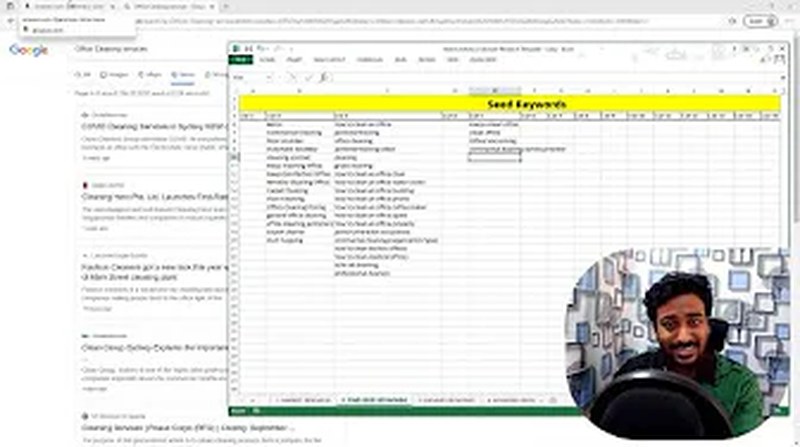
This guide walks through every free data source I use when I want to understand a new niche from scratch. I ran this process live on “office cleaning services” in the video above, picking a niche I knew nothing about to show exactly how this works in real time.
What Is Long-Tail Keyword Research (and Why Does Brainstorming Matter)?
Long-tail keywords are search phrases with three or more words that have lower search volume but higher purchase intent and lower competition. A keyword like “commercial cleaning” gets a lot of searches. But “eco-friendly commercial cleaning service for medical offices” is what someone types when they are ready to hire.
The problem with jumping straight to a keyword tool is that tools only tell you what is already being searched at measurable volume. They miss the emerging terms, the industry jargon, the customer pain-point language, and the niche-specific vocabulary that gives you an edge. Brainstorming from real-world sources fills that gap.
There are two types of people doing keyword research:
- Business owners or site owners who already know their niche and want to expand it
- Affiliate marketers, freelancers, and content strategists who are entering a completely unfamiliar industry
If you fall into category two, the pre-research phase is not optional. You need to understand how real people talk about this industry before a tool can show you anything useful.
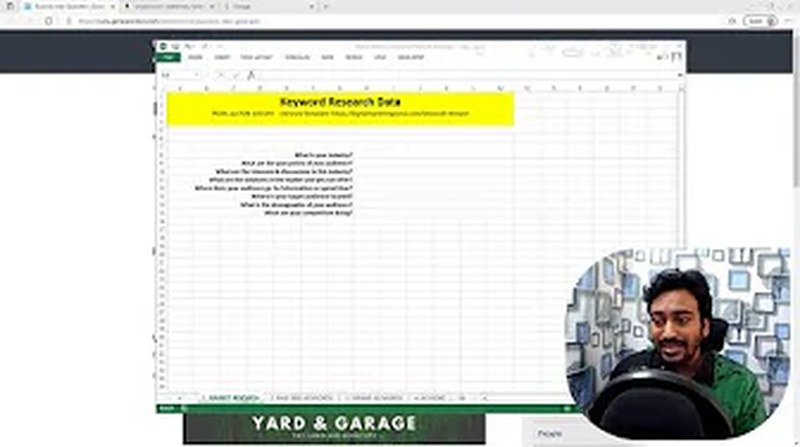
The Keyword Brainstorming Spreadsheet
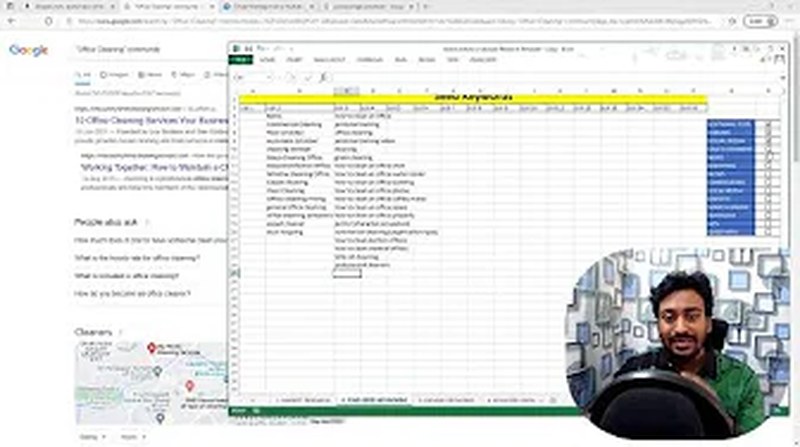
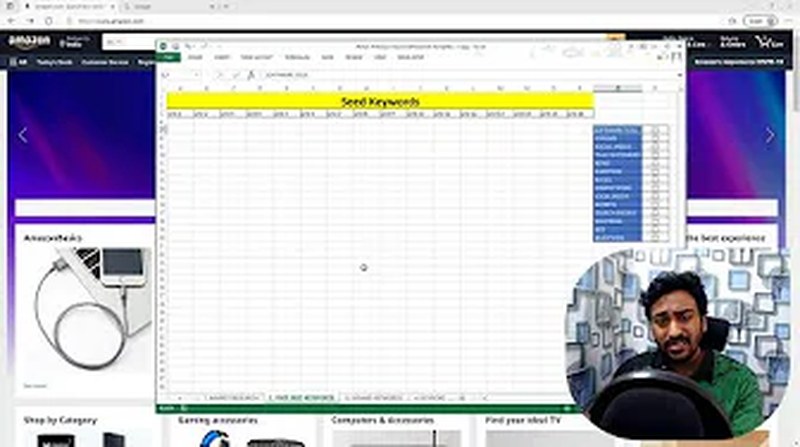
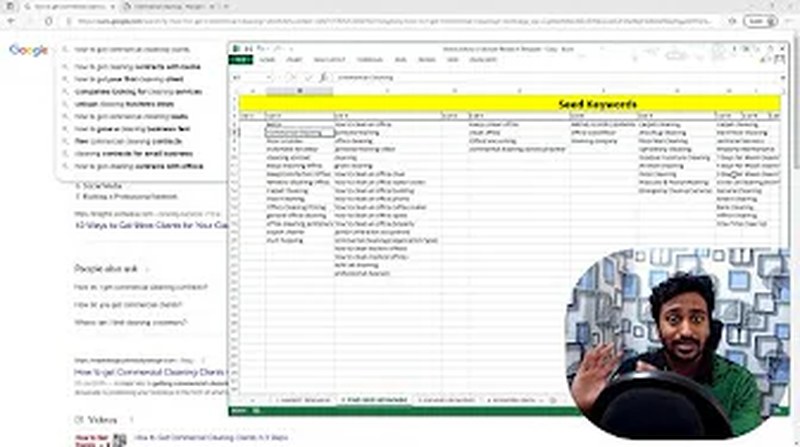
Before you start, set up a simple spreadsheet to capture ideas as you go. I have a free template you can download from the link in the video description.
The columns I use:
| Column | What to Record |
|---|---|
| Seed keyword / topic | The core idea you found |
| Source | Where you found it (forum, YouTube, Amazon, etc.) |
| Intent | Informational, commercial, transactional, or navigational |
| Notes | Pain points, specific jargon, questions asked |
Do not worry about volume or difficulty at this stage. You are filling a bucket of raw ideas. The tools come later to filter and prioritize.
1. Forums and Online Communities
Forums are the most underused source for long-tail keyword research. Real people post their real problems, use real industry language, and ask the exact questions your target audience types into Google.
Start by searching for forums in your niche using these operators:
niche + foruminurl:forum + nichesite:reddit.com + niche
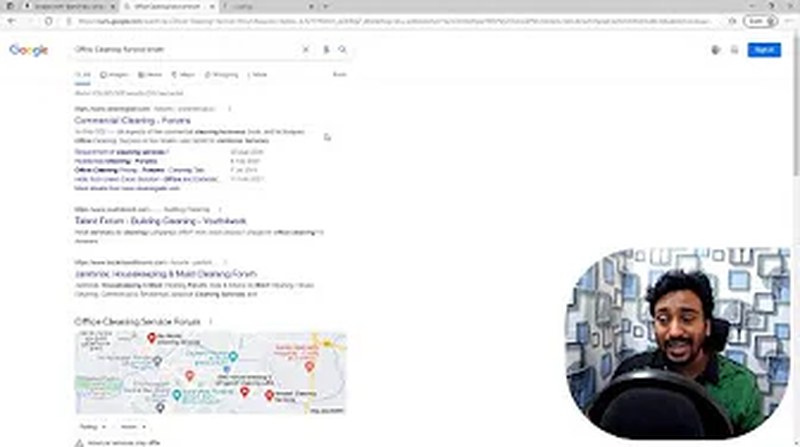
For the office cleaning example, I searched “office cleaning forum” and found threads discussing “day porter services,” “biohazard cleanup protocols,” and “green cleaning certification” — three keyword clusters I never would have found in a generic keyword tool.
What to look for in forums:
- Thread titles that are phrased as questions
- Terms that appear repeatedly in replies
- Complaints and frustrations that signal pain-point content opportunities
- Technical jargon that non-experts would search to understand
Consider a plumbing services site. Forums will surface terms like “slab leak detection cost,” “repiping vs repair,” and “water hammer noise fix” that keyword tools might show at low volume but represent high-intent traffic.
Pro Tip: Look at the words people use to describe their problem, not just the solution. Someone asking “why does my office smell bad after cleaning” is a better keyword starting point than “office cleaning tips.”
2. Reddit
Reddit deserves its own section because it is the richest free source for natural language keyword research available. Subreddits are niche communities where people post unfiltered questions, rants, reviews, and recommendations.
Use these approaches:
Search within subreddits: Go to a relevant subreddit and sort by “Top” for the past year. The highest-voted posts reflect the topics your target audience cares most about.
Use Reddit search operators: Try site:reddit.com "office cleaning" in Google to find highly indexed threads.
Mine thread comments: The top comments in a popular thread contain the specific vocabulary real people use. These are long-tail keyword gold.
For a quick workflow, I combine Reddit research with Semrush’s keyword tool. I find the actual phrases from Reddit, then validate them in the Semrush Keyword Magic Tool to check volume and difficulty. That combination of human language plus data is more powerful than either alone.
I wrote a full guide on finding low-competition keywords using Reddit and Semrush if you want to go deeper on this method.
3. Social Media (YouTube, Instagram, TikTok, LinkedIn)
Social media platforms are search engines in their own right, and they surface keyword data that Google’s tools simply do not capture.
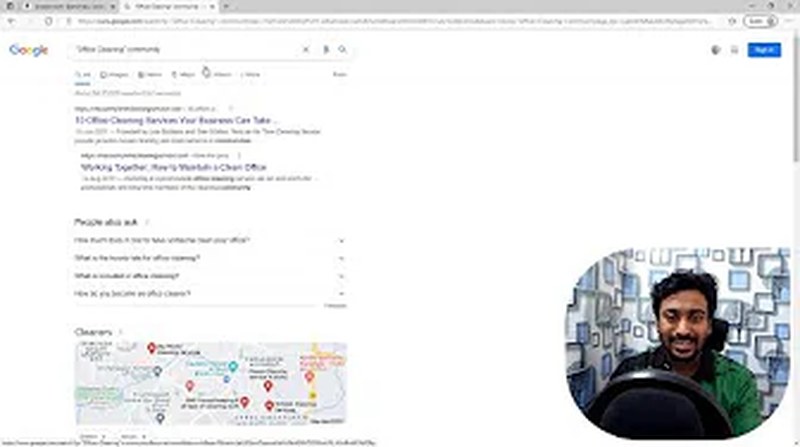
YouTube is the most valuable social source for keyword research:
- Search your seed keyword and look at the suggested search terms in the autocomplete dropdown
- Read the top video titles, they are written to target specific search phrases
- Check video tags: right-click on any YouTube page and “View Page Source,” then search for
"keywords"to see all tags the creator used - Read the comments section on top-performing videos. Comments contain questions, frustrations, and vocabulary your audience uses
For the cleaning niche, I found comments asking about “hospital-grade disinfectant,” “COVID cleaning protocol,” and “OSHA cleaning standards for offices” — all with real SEO potential.
Instagram and TikTok:
- Hashtags are keyword research in visual form. Search your seed keyword and check related hashtags
- The “For You Page” content reveals trending angles within a niche
- Caption text in top posts contains natural keyword-rich language
LinkedIn:
- Posts and articles use professional industry terminology
- Job listings reveal the exact language used in corporate environments
- Particularly valuable for B2B keyword research
4. Talking to Customers and Prospects
This is the highest-quality keyword research you can do, and almost no one does it.
If you have access to customers, ask them:
- “What did you search for when you first had this problem?”
- “How would you describe the service you needed before you knew what it was called?”
- “What questions did you have that you could not find answers to online?”
The gap between what industry professionals call something and what customers call something is where long-tail keyword opportunities live. A commercial cleaning company might call their service “janitorial services,” but their customers search “office cleaning company near me” or “how often should you clean a business.”
If you do not have customers to talk to, read customer service chat logs, support tickets, and sales call transcripts. Every question a customer asks is a potential keyword.
5. Google News
Google News reveals what the industry is currently talking about. This is valuable for two reasons: it surfaces emerging terminology before it hits keyword tool databases, and it shows you the language journalists and publications use — which is often how educated buyers search.
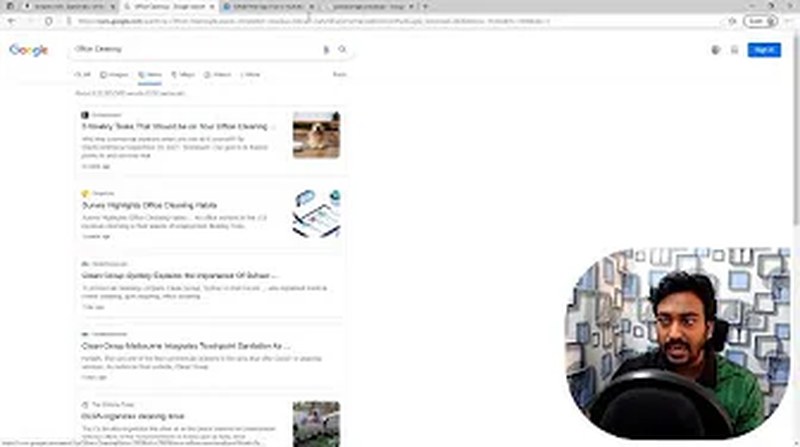
Go to news.google.com and search your seed keyword. Look for:
- Topic clusters that appear repeatedly across multiple articles
- Specific terminology or phrases that appear in headlines
- Emerging issues or trends that do not yet have established keyword competition
For the cleaning niche, a Google News search revealed articles about “antimicrobial surface coating services,” “touchpoint disinfection protocols,” and “post-construction cleaning liability” — real keyword opportunities with informational and commercial intent.
Bonus tip: Click on a news article and scan the subheadings and pull quotes. Journalists write for clarity, which means they use the same plain-language search terms your audience uses.
6. Shopping Sites (Amazon, Google Shopping, eBay)
E-commerce sites are hidden treasure for keyword research, even if you are doing SEO for a service business.
Amazon is the most powerful shopping research source:
Amazon autocomplete: Start typing your seed keyword in the Amazon search bar and watch the autocomplete suggestions. These suggestions are based on real buyer behavior, not estimated search volume. They represent what people actually type when they want to buy.
For “office cleaning,” Amazon’s autocomplete surfaced “office cleaning supplies bulk,” “commercial cleaning products for offices,” “janitorial cleaning cart with wheels,” and “microfiber mop system commercial.”
Amazon product categories: The left-hand navigation on Amazon search results shows you the exact sub-categories buyers use to narrow their search. These category names are keyword gold.
Amazon reviews and Q&A sections: Customer reviews reveal pain points and vocabulary that marketing copy never uses. Look for:
- What problem did they have before buying?
- What specific feature solved the problem?
- What complaint appears in multiple one-star reviews?
Real example from an office vacuum cleaner review: “Finally a vacuum that handles the carpet tiles in our open-plan office without leaving lines.” That phrasing contains several long-tail keyword ideas.
Google Shopping: Search any product or service category and look at the product listing titles. Sellers write these to rank in Google Shopping, so they pack them with high-intent keyword variations.
7. Blogs and Niche Sites
Reading authoritative content in your target niche teaches you the vocabulary, structure, and questions that matter in that industry.
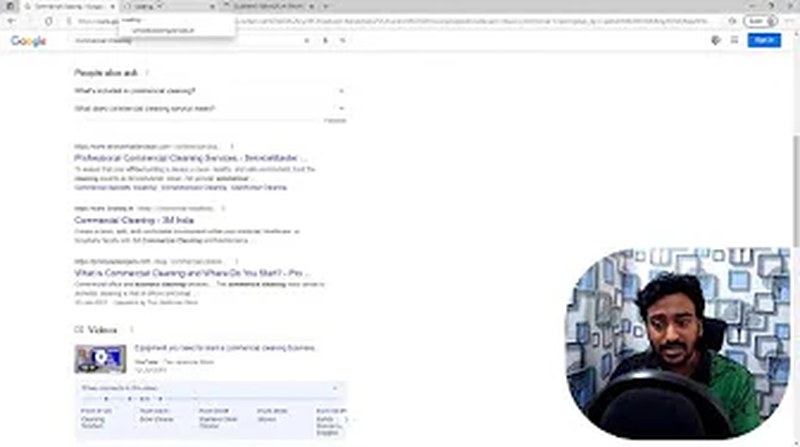
How to mine blogs for keywords:
- Search your seed keyword in Google and read the top 5 organic results
- Look at the table of contents or headings of long articles — each H2 is usually targeting a separate long-tail keyword
- Note terms that are bolded, defined, or explained (these are keywords the author knew readers would search)
- Check what internal links exist within the article — linked anchor text reveals priority keywords for that site
Industry association and trade publication sites are especially valuable. They use precise, professional terminology that is exactly what educated buyers search. For the cleaning niche, industry association sites used terms like “Green Seal GS-37 certified cleaning,” “LEED points cleaning documentation,” and “OSHA 1910.1030 bloodborne pathogen cleaning.”
What to do with what you find: When you spot a new term, ask yourself:
- Is this something a person would search for?
- Does it suggest clear intent (informational, commercial, transactional)?
- Does it relate to your target business service or product?
If yes, add it to the brainstorm spreadsheet. Volume validation comes later.
8. Competitor Websites
Your competitors have already done keyword research. Their website structure tells you exactly what they are targeting.
What to analyze on competitor websites:
Service pages and navigation menus: Every page in the navigation represents a keyword cluster the competitor considers important enough to build a dedicated page for. Note every service category, sub-service, and location they list.
FAQ sections: FAQs are almost always written to target question-based long-tail keywords. A competitor’s FAQ page is a pre-built list of keyword opportunities.
Blog categories: The categories a competitor uses on their blog reveal how they have structured their content strategy and what keyword clusters they are pursuing.
Meta titles and descriptions: Right-click on any page and “View Page Source” to see the meta title and description. These are often written to contain the primary and secondary keywords the page targets.
Bold and repeated terms: Scan the page text for words that appear bolded or multiple times. These signal high-priority terms for that competitor.
For deeper competitor keyword analysis, I use Semrush Organic Research to see exactly which keywords a competitor ranks for and the Semrush Keyword Gap tool to find keywords they rank for that I do not have content for yet.
9. Local Directories and Classified Ads
Local directories reveal location-specific and service-specific keyword variations that generic keyword tools miss. This source is especially valuable for local SEO.
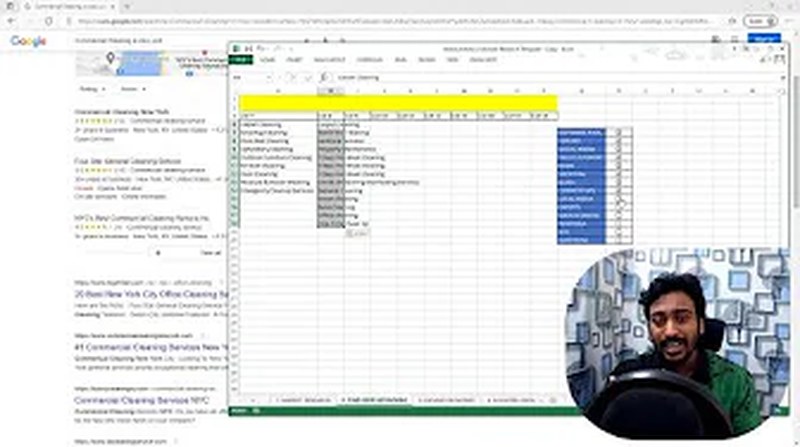
Where to look:
- Yelp and Google Business Profile category lists
- Angi (formerly Angie’s List) service categories
- Thumbtack pro service listings
- Craigslist service sections (yes, really)
- Local newspaper classified sections
- Chamber of commerce member directories
What to look for:
Each platform structures its categories differently, and each structure reveals how buyers think about and categorize services. Craigslist’s cleaning section, for example, uses plain buyer language like “office cleaning help wanted,” “move-out cleaning service,” “carpet steam cleaning,” and “window washing commercial.”
These are the exact phrases people type when they are ready to hire — high-value commercial intent keywords that do not always show up as high-volume in keyword tools.
Pro Tip for local SEO: Check the “[city] + [service]” pages on Yelp and Angi. The headings and service descriptions on these pages contain the localized keyword patterns that dominate local search results.
10. Industry Experts and Publications
Trade journals, industry associations, and expert publications use precise terminology that serious buyers search when they are deeper in the research process.
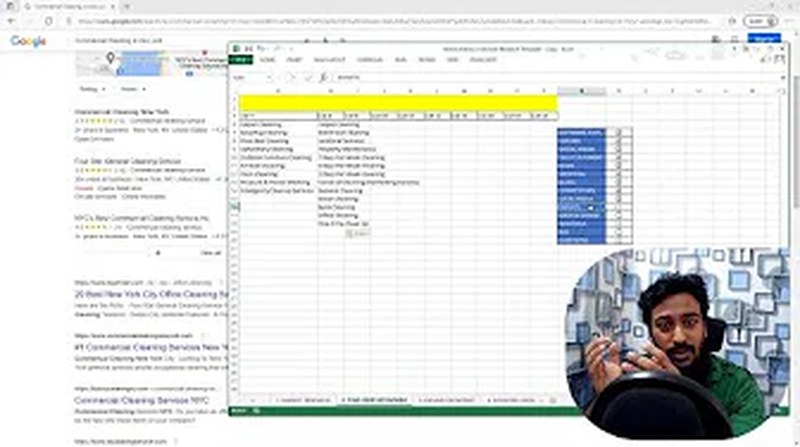
Where to find industry expert content:
- Trade association websites (look for “[industry] association” or “[industry] institute”)
- Trade magazines (many have free online archives)
- Industry conference session titles and speaker presentations
- Professional certification programs (the curriculum names are often keyword-rich)
- Government agency publications for regulated industries
For the cleaning niche, the ISSA (Worldwide Cleaning Industry Association) website contained terms like “disinfection verification testing,” “cleaning for health protocol,” and “occupational hygiene assessment” — extremely specific terms that serious buyers in medical or government sectors would search.
LinkedIn thought leaders: Search for experts in your niche on LinkedIn and read their articles. Professional LinkedIn content uses industry-standard terminology that represents what decision-makers at target businesses actually type into Google.
11. Search Engine Autocomplete and “People Also Ask”
Search engines themselves are among the best keyword brainstorming tools available for free.
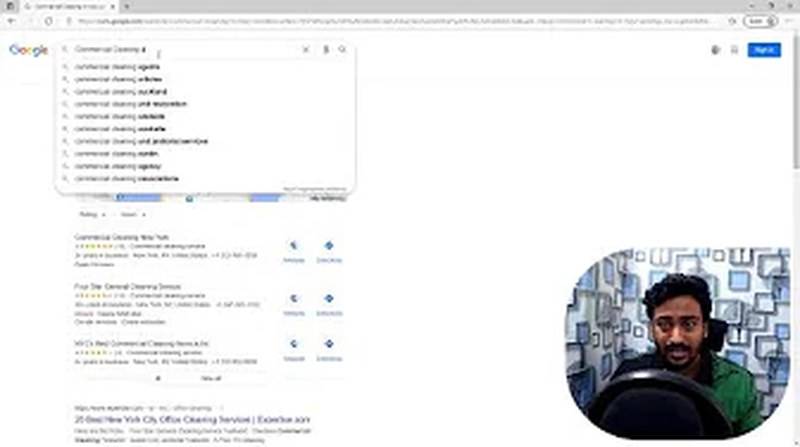
Google autocomplete:
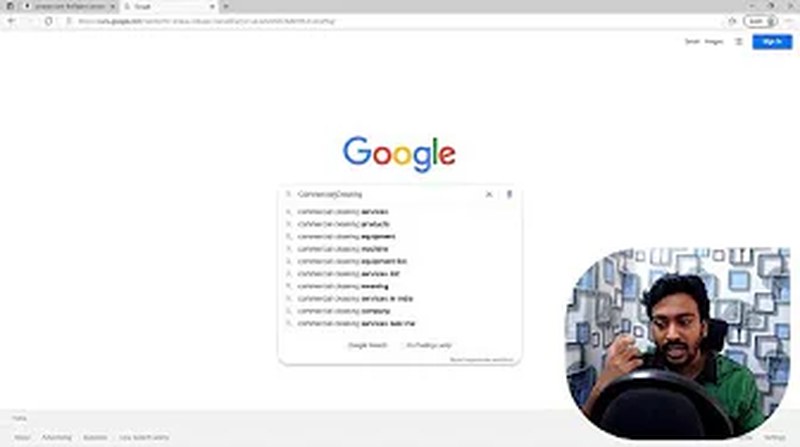
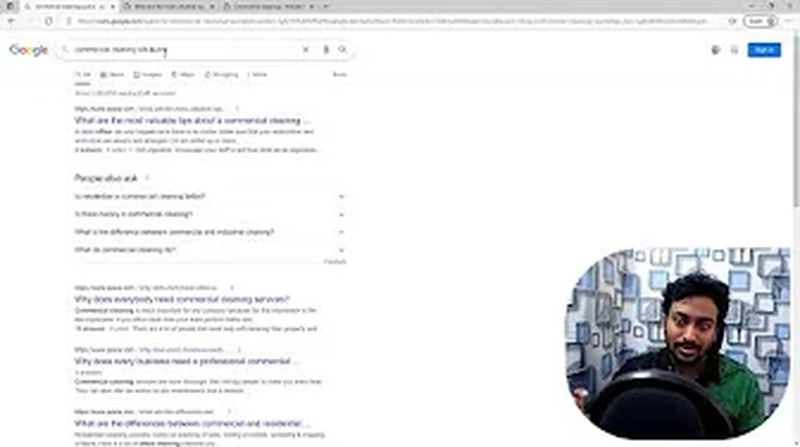
Type your seed keyword into Google and pause. The dropdown suggestions are based on actual search behavior — these are real queries people type. Every suggestion is a potential article, service page, or FAQ entry.
Work through the alphabet: type “office cleaning a,” “office cleaning b,” and so on. You will uncover dozens of long-tail variations you would never think of on your own.
Google “People Also Ask” (PAA):
When you search a keyword and see the “People Also Ask” accordion boxes, click on a question to expand it. When you expand one question, new questions appear. This chain of related questions gives you a deep cluster of question-based long-tail keywords.
Google “Related Searches” (bottom of page):
The eight related searches at the bottom of each Google results page show you how Google categorizes and connects related keyword concepts.
Bing autocomplete:
Bing’s autocomplete sometimes surfaces different suggestions than Google. I run the same seed keyword through both to catch anything Google misses.
YouTube autocomplete:
Already covered in the social media section, but worth repeating: YouTube’s autocomplete reflects video search behavior specifically. If you create video content, this is your primary source for video-specific long-tail keywords.
For a comprehensive approach to keyword research using GSC data, check my guide on using Google Search Console for keyword research.
12. Wikipedia
Wikipedia is one of the most underrated keyword research sources, and it takes less than two minutes to use.
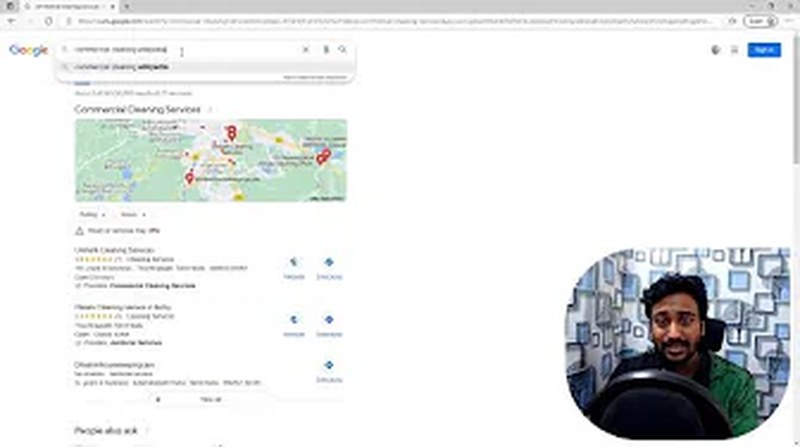
How to use Wikipedia for keyword research:
- Search your seed keyword on Wikipedia
- Look at the table of contents of the Wikipedia article — this is a pre-built topic map showing every major sub-topic in the niche
- Scan the introduction paragraph — it defines the topic using multiple synonyms and related terms that people search
- Look at internal links within the article — every linked phrase is a term Wikipedia considers significant enough to have its own page
For “commercial cleaning,” the Wikipedia article table of contents included: “Types of cleaning services,” “Cleaning agents,” “Equipment,” “Professional certifications,” “Health and safety regulations,” and “History of commercial cleaning.” Each section heading is a potential keyword cluster.
The “See Also” section at the bottom of Wikipedia articles points to related topics you may not have considered. These often contain lateral keyword opportunities in adjacent niches.
13. Paid Advertisements
People who pay money for ads know what converts. Their ad copy is keyword research gold because they have tested which phrases get clicks from buyers.
Where to find ad copy:
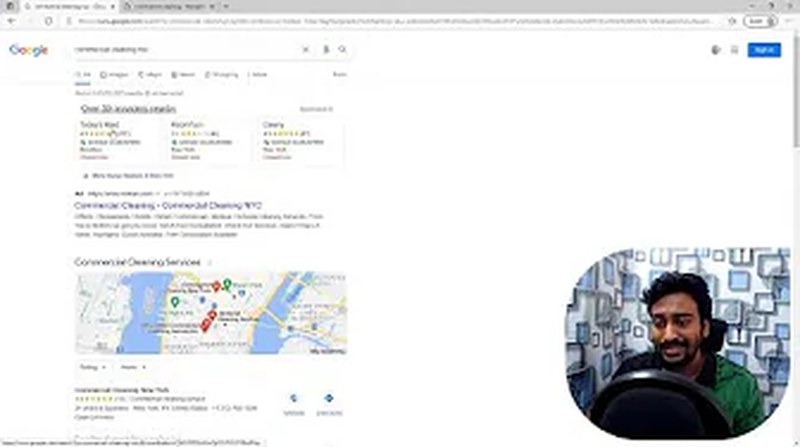
Google Ads in search results: Search your seed keyword and look at the top ads. The headline text contains the keywords the advertiser is paying to rank for. These are almost always high-commercial-intent terms.
Google Display Network ads: When browsing websites in your target niche, notice the display ads that follow you. Remarketing ads use highly specific product and service language.
Facebook Ad Library: The Facebook Ad Library lets you search any brand’s active ads for free. You can see the exact language successful advertisers use in your niche right now.
Why this works: Advertisers test ad copy obsessively and only keep running ads that convert. When you see the same phrase appearing in multiple ads from different competitors, that phrase has been market-validated as language that triggers buying behavior. Target it.
For the cleaning niche, paid ads consistently used phrases like “same-day commercial cleaning,” “bonded and insured cleaning crew,” “OSHA-compliant cleaning service,” and “guaranteed clean or free re-clean.” Every one of these is a long-tail keyword with transactional intent.
14. Question and Answer Communities (Quora, Stack Exchange, Answers.com)
Q&A platforms are libraries of real problems, written in the exact language real people use when they do not know the answer.
Quora for keyword research:
- Search your seed keyword on Quora
- Look at the question titles — these are phrased exactly as people would type them into Google
- Read the answers for industry terminology and related subtopics
- Note which questions have many followers (indicating high interest)
For “commercial cleaning,” Quora questions included: “What is the difference between janitorial and custodial services?”, “How do I find a reliable commercial cleaning service for my office?”, “What chemicals are safe for cleaning medical office equipment?”, and “How often should commercial carpets be deep cleaned?”
Each of these is a ready-to-use long-tail keyword or article idea.
Stack Exchange for technical niches: If you are in a technical niche (software, engineering, construction, medical), Stack Exchange provides highly specific question-based keywords that serious practitioners search.
Answer Socrates is a free tool I have reviewed that pulls question-based keywords automatically from multiple Q&A platforms. If you want to accelerate this process, check my Answer Socrates review — it automates what I just described manually.
15. Free Keyword Research Software
After completing manual brainstorming, keyword tools validate and expand what you found. Used in this order — manual research first, tools second — they perform significantly better because you are feeding them informed seed keywords.
Free tools that work:
Google Keyword Planner: Free with a Google Ads account (you do not need to run ads). Shows search volume ranges and related keywords. The “Discover new keywords” feature is particularly useful for expanding seed keywords you gathered from manual research.
Ubersuggest: Neil Patel’s free tier gives you volume, keyword difficulty, and related keyword suggestions. Limited daily searches on the free plan but useful for quick validation. I have a full Ubersuggest review if you want to know where it stands against paid tools.
Google Search Console: If your site is already live, GSC is the most accurate keyword data you have access to — showing real impressions and clicks for your actual content.
Semrush Free Account: Semrush’s free tier gives you 10 keyword lookups per day. That is enough to validate your top brainstormed ideas before committing to a content plan.
For the tools I consider worth paying for at different budget levels, check my best SEO tools roundup which covers options at every price point including the $0 stack.
16. Your Own Email Inbox and Support Data
If you run a business or manage one, you already have one of the richest keyword research sources available: your own customer communications.
Where to look:
- Email inquiries: What specific questions do prospects ask before they hire you?
- Support tickets: What problems do customers report after purchase?
- Live chat logs: What do visitors ask on the website?
- Sales call recordings or notes: What objections and questions come up repeatedly?
A cleaning company owner told me that 40% of their email inquiries contained the phrase “do you clean after construction” — a high-intent commercial query they had never specifically targeted on their website. Adding a dedicated service page for “post-construction cleaning” to target that specific phrase was one of the highest-ROI SEO moves they made.
Bonus: AI Tools for Keyword Brainstorming
AI chatbots like ChatGPT, Claude, and Perplexity are useful for accelerating the brainstorming process. They can quickly generate keyword lists, suggest related topics, and simulate how different types of buyers might search for a service.
I use these as a starting point to generate ideas quickly, not as a replacement for manual research. AI-generated keyword ideas still need validation against real human sources.
I have shared 40 specific ChatGPT prompts for SEO keyword research that you can copy and use right now.
How to Organize and Prioritize What You Find
After working through these 15+ sources, you will have a long list of raw keyword ideas. Here is how to turn that list into a prioritized content plan.
Step 1: Group by intent
Separate your keywords into four buckets:
- Informational (“what is commercial cleaning”)
- Commercial investigation (“best commercial cleaning companies”)
- Transactional (“hire commercial cleaning service near me”)
- Navigational (branded searches for specific companies)
Step 2: Identify clusters
Group related keywords together. “Office cleaning schedule,” “how often to clean office,” and “commercial cleaning frequency” are all variants of the same topic and can be addressed in a single piece of content.
Step 3: Validate with tools
Take your top 20-30 keyword ideas and run them through a keyword tool to get volume, difficulty, and CPC data. This step filters out keywords nobody searches, not to eliminate low-volume terms (low volume + high intent is often a better target than high volume + no intent), but to sanity-check your priorities.
My free keyword research Excel template has columns for all of this built in.
Step 4: Match to content types
- Informational keywords become blog posts and guides
- Commercial investigation keywords become comparison pages, reviews, and roundups
- Transactional keywords become service pages, product pages, and landing pages
For a deeper framework on finding high-intent keywords worth targeting, read my guide on profitable long-tail keyword strategy.
How to Find Long-Tail Keywords Without a Paid Tool
You can find strong long-tail keywords entirely for free by combining these sources in sequence: start with Google autocomplete and “People Also Ask,” mine Reddit and Quora for real questions, scan Amazon reviews for buyer language, check competitor FAQ pages, and use Wikipedia for topic structure. Use Google Keyword Planner (free with a Google account) to validate volume. That workflow costs nothing and consistently surfaces keyword opportunities that pure tool-based research misses.
Frequently Asked Questions
What is a long-tail keyword and why does it matter for SEO?
A long-tail keyword is a search phrase with three or more words, typically more specific than a broad “head” keyword. “Commercial cleaning” is a head keyword. “Eco-friendly commercial cleaning for medical offices in Austin” is a long-tail keyword. Long-tail keywords matter because they have lower competition, higher purchase intent, and are much easier for new or mid-authority sites to rank for.
How many sources do I need to research before starting keyword research?
You do not need to use all 15+ sources on every project. For a new niche, I recommend starting with four: Google autocomplete, Reddit, Amazon reviews (or equivalent for non-product niches), and one Q&A platform. For an existing business doing a full audit, work through all sources systematically over a few sessions.
Can I skip the brainstorming phase and just use a keyword tool?
You can, but you will miss the best opportunities. Keyword tools show you what is already being searched at measurable volume. They miss emerging terms, hyper-specific long-tail variations, and the natural language your actual customers use. Brainstorming from real sources then validating with tools is consistently more effective.
How long does keyword brainstorming take?
For a focused effort covering 5-7 sources on a single niche, expect 2-4 hours the first time. With practice it gets faster. I can work through the key sources for a familiar niche in under an hour.
What is the best free tool for validating brainstormed keywords?
Google Keyword Planner is the most accurate free tool for search volume data because it pulls directly from Google’s ad data. Ubersuggest’s free tier is useful for keyword difficulty estimates. If you want to go further, check the active SEO lifetime deals page for tools that give full access at a one-time cost.
What to Do Next
You have the sources. Now use them.
Pick one niche or client site this week. Work through five sources from this list and fill your brainstorming spreadsheet. Then take the best 20 ideas to a keyword tool for validation.
The marketers who win at long-tail keyword research are not the ones with the best tools. They are the ones who actually understand how their audience talks about their problems. That understanding comes from these sources, not from a dashboard.
If you want to follow a step-by-step process for structuring the keywords you find into a complete content strategy, read my guide on keyword brainstorming and research fundamentals. And if you want to see all of these sources used live on a real niche, watch the full video walkthrough at the top of this page.
Disclosure: This article contains links to tools I have personally tested and reviewed. Some links are affiliate links. I always provide both referral and non-referral options. See my transparency policy for full details.